Which Car Repairs Are Worth DIY and Which Belong at a Shop
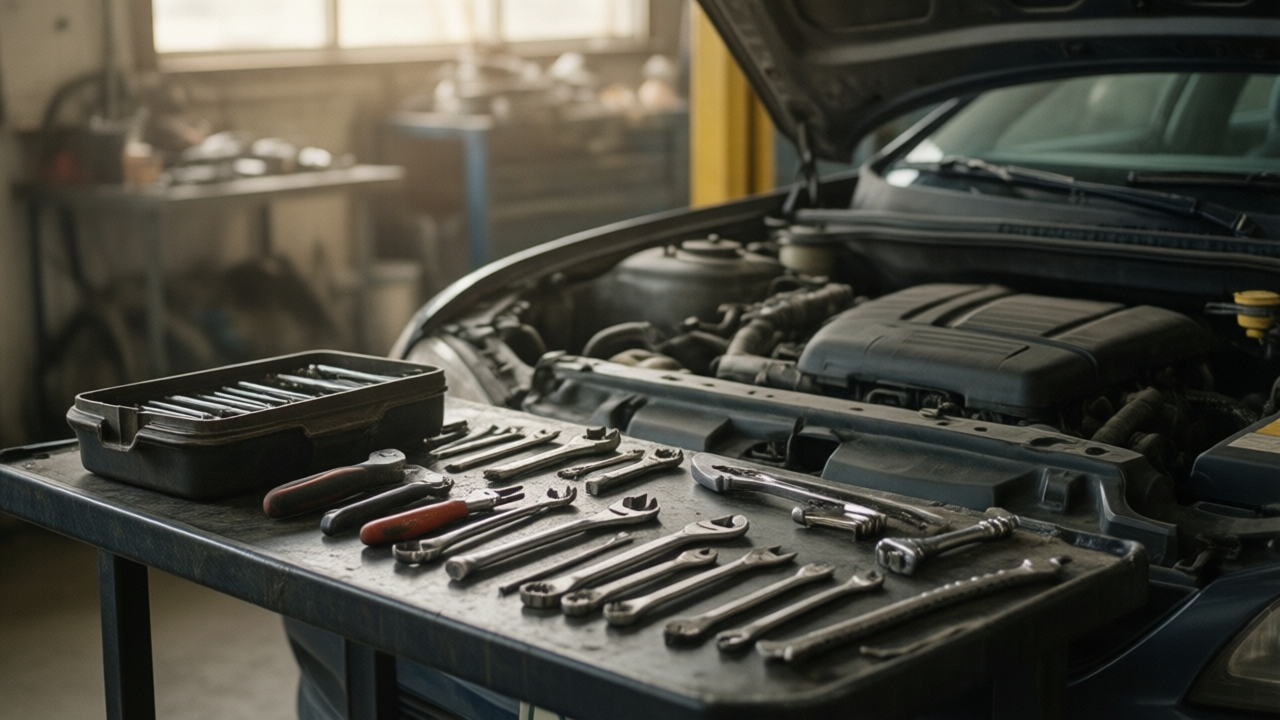
The internet makes every repair look approachable, and some genuinely are. The useful question is not whether a job is possible in a driveway, but whether the savings justify the risk and the time.
Genuinely worth doing yourself
These need few tools, have low consequences if done imperfectly, and carry disproportionate shop labor.
- Air filters, engine and cabin. Usually clips and a few minutes. Shops often charge many times the part cost.
- Wiper blades. No tools at all on most vehicles.
- Battery replacement. A wrench and attention to terminal order. Disconnect negative first, reconnect negative last.
- Headlight and taillight bulbs. Often trivial. Avoid touching halogen glass with bare fingers.
- Key fob batteries, fuses, and topping off fluids. All straightforward.
Reasonable with tools, patience, and a manual
- Oil changes. Real savings on vehicles that take a lot of oil, but you need ramps or stands, a drain pan, and a plan for recycling. Never work under a car supported only by a jack.
- Brake pads and rotors. Achievable on many vehicles and a large labor saving. The consequences of error are serious, so do this first alongside someone experienced.
- Spark plugs. Easy on some engines, miserable on others, particularly where intake components sit over the rear bank. Research your specific engine first.
- Serpentine belt. Often one tensioner and careful routing. Photograph the routing before removal.
Leave these to a shop
- Anything involving the timing system. Belts and chains require precision and special tools, and errors destroy engines.
- Transmission internals. Complexity and specialized equipment.
- Air conditioning. Refrigerant is regulated, requires recovery equipment, and cannot legally be vented.
- Suspension springs. Compressed coil springs store enormous energy and have caused severe injuries.
- Airbags and restraint systems. Live pyrotechnic devices.
- Alignment. Requires a rack. Not a driveway job under any circumstances.
The real economics
Shop labor rates make simple jobs look expensive, but the rate covers a lift, a full tool inventory, diagnostic equipment, and a warranty on the work. For a job that takes a shop half an hour, your savings are often modest once you buy the one specific tool you needed.
The jobs worth doing yourself are those where labor dominates part cost: brakes, plugs on an accessible engine, filters. Hand over the ones where a mistake costs more than the entire repair.
Before starting anything
- Buy factory service information for your vehicle rather than relying on a video of a different model year.
- Have every tool before you begin, including the one you will not discover you need until the car is apart.
- Consider how you will get to work tomorrow if the job runs long. This is the most common regret.
- Keep the old parts until the new ones are proven working.
The honest middle ground
Many people land on doing routine maintenance themselves, which builds familiarity with the vehicle, and paying for diagnostic and safety-critical work. Knowing your car well makes you a better customer at the shop, because you can describe symptoms precisely and recognize when a recommendation does not match what you are experiencing.
Article Was Generated By AI.